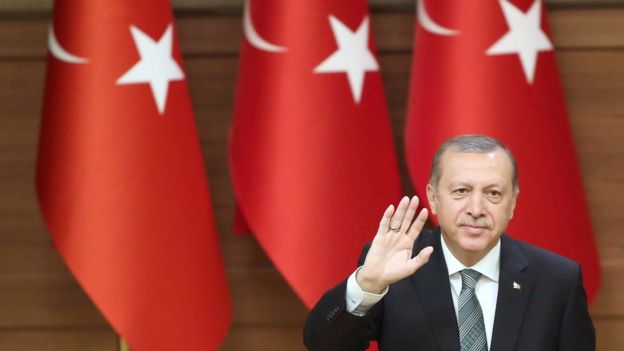
The European Commission will give
conditional approval for Turks to travel without visas to Europe's
passport-free Schengen area, sources have told the BBC.
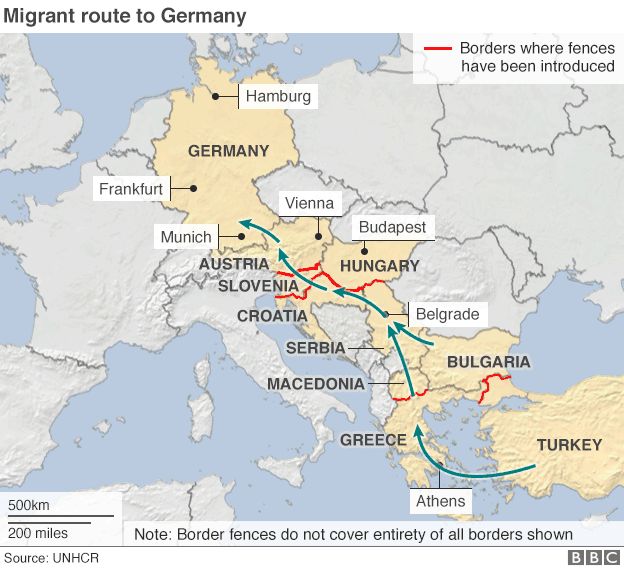
Visa liberalisation was offered in return for Turkey taking back migrants who crossed the Aegean Sea to Greece.
But Turkey must still meet EU criteria, and the visa deal needs approval by the European Parliament and member states.
The EU fears that without this deal, Turkey will not control migration.
The
waiver would scrap the requirement for Turks to get a three-month,
short-stay Schengen visa, for tourism or business trips. But it will not
grant Turks the right to get a job in Europe.
The UK, Ireland and Cyprus are not in Schengen, so they will keep the visa requirement for Turkey.
Turkey has threatened to stop taking back migrants from Greece if the EU fails to deliver on visa liberalisation.
A
long-running dispute with Cyprus is a major stumbling block in Turkey's
bid to join the EU, not least because Ankara does not recognise the
Republic of Cyprus, an EU member,
Turkish-controlled northern Cyprus does not
have international recognition.
But
a Turkish official, quoted by Reuters news agency, said a visa deal
with the EU would also mean Turkey scrapping its visa requirement for
Greek Cypriots.
What is the Schengen agreement?
Turks look to EU to scrap visas
The
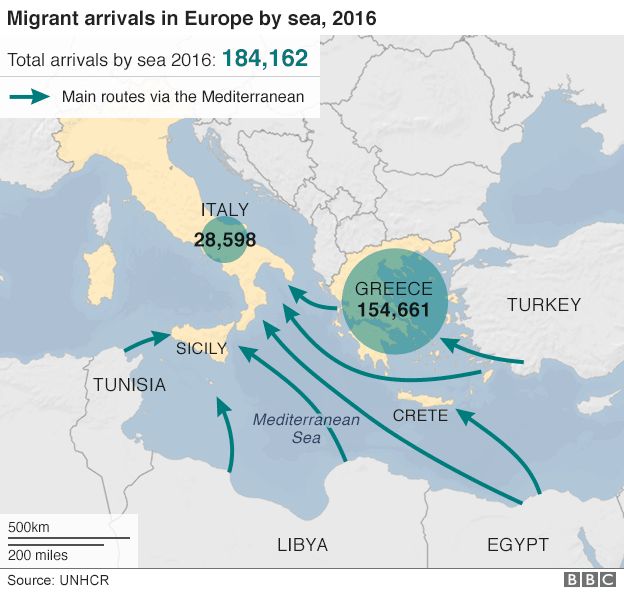
large influx of migrants and refugees arriving in Europe from Turkey,
and from North Africa, has caused a political crisis among EU states.
Migration pressure - analysis by Katya Adler, BBC Europe Editor
If
the European Commission (the EU's executive body) does make the
recommendation on Wednesday that Turks be granted visa-free travel in
Europe's Schengen area, as whispers from well-placed EU sources suggest,
then it will be doing so holding its nose and its breath.
Freedom
of speech; the right to a fair trial; revising terrorism legislation to
better protect minority rights - these are just some of the criteria
demanded by the EU of countries before it lifts visa requirements, even
for short-term travel.
It is hard to see how Turkey could be
described as meeting these conditions. The government in Ankara
increasingly cracks down on its critics in a manner more autocratic than
democratic.
But these are desperate times for the EU. The
European Commission and most EU governments are under huge public
pressure to ease the migrant crisis.
My sources say the Commission
will therefore keep to the agreed script. But they insist this is no
blank cheque. Turkey will get the green light over visas this week to
keep it sweet. But it will also be informed of the outstanding criteria
it still needs to meet.
Read more from Katya
Is the visa waiver likely to happen?
There
is a good chance it will. EU politicians are under huge pressure to
keep sending migrants back to Turkey, even though the deal is very
controversial. And Turkey insists that the EU must fulfil its offer of
visa liberalisation by the end of June.
However, British MEP Claude Moraes told the BBC that the deal would come under very tough scrutiny in the European Parliament.
Many
Turks regard the visa requirement as humiliating - some have missed
study opportunities or business conferences in the EU for want of a
visa. And scrapping visas would signal that the EU is serious about
Turkey's negotiations to join the bloc.
Under the EU-Turkey agreement,
migrants who have arrived illegally in Greece since 20 March are to be
sent back to Turkey if they do not apply for asylum or if their claim is
rejected.
For each Syrian migrant returned to Turkey, the EU is to take in another Syrian who has made a legitimate request.
Under the agreement, Turkey must meet 72 conditions by
4 May to earn visa-free access to the Schengen area by the end of June.
Diplomats have suggested that fewer than 10 still need to be met.
Human rights groups question the deal's legality and argue that Turkey is not a safe place to return people to.
Last month, however, European Council President Donald Tusk said the deal had begun to produce results.
He praised the Turkish government as "the best example in the world on how to treat refugees".
What are the arguments for and against?
Concerns
have been raised in the European Parliament that this looks like a
reward for Turkey, because of its co-operation in the migrant crisis.
Ankara falls short of many EU human rights benchmarks.
MEPs accept that
Turkey is a "key strategic partner" for the EU. But they say reforms
have slowed down in Turkey in many areas, including freedom of speech
and judicial independence.
MEPs voiced concern about continuing
fighting in south-eastern Turkey between government troops and Kurdistan
Workers' Party (PKK) rebels, whom the government in Ankara describes as
"terrorists".
The European Commission's 2015 report on Turkey
also complained of politicisation of the Turkish judiciary, widespread
corruption, inadequate protection of minority rights and "significant
backsliding" on freedom of speech and assembly.